Thursday, March 1, 2018

Holi: A Festival of Colours & Joy


Holi_colours
Holi_colours

Holi is a celebration of the onset of spring. Farmers celebrated happy harvest every year at this time and welcomed the season of spring with celebrations. Since then, the tradition of celebrating with dance, music and colours started.
Once upon a time, the colours used during Holi were prepared from the flowers of trees that blossomed during spring like flowers of ‘tesu’ or ‘palash’ tree and known as gulal. Most of these trees also had medicinal properties and the colours obtained from them were highly beneficial to the skin and body. With the rapid commercialisation of this festival and a strong demand for other colours, artificial colours,consisting of a large number of chemicals, became easily available. These poses serious health issues.
The best way to prevent any powder from sticking to your skin is to moisturise well beforehand. Some people also oil their hair so that the powder is easier to remove, or wear a hat. It is also recommended that anyone taking part uses home-made powders with ingredients that are guaranteed to be non-harmful or use oraganic colors . One way you can do this is by putting together a mix of flour, water and a few splashes turmeric(yellow), red rose petals(red), jaccarda flowers(blue), mehendi(green).
Holi, known as the ‘festival of colors’ is celebrated on the full moon day falling in the month of Phalguna (Feb-Mar). It takes place over two days, and is a celebration of fertility, colour, and love, as well as the triumph of good versus evil. The word "Holi" originates from "Holika", the evil sister of demon king Hiranyakashipu.
As per ancient mythology, blinded by special powers King Hiranyakashipu, grew arrogant, thought he was God, and demanded that everyone worship only him. However, his own son, Prahalad refused to worship his father and remained a true devotee of Lord Vishnu. Out of frustration and anger, Hiranya Kasyap tries to kill his son Bhakta Prahlada by using his sister Holika, who is fire resistant, then due to the blessing of Maha Vishnu Prahlada came out from the fire safely but Holika burnt in that fire. Lord Vishnu arrived in the earth as Narasimha avatar and killed Hiranyakashyap portraying the victory of good or evil.
Another legend goes with Lord Shiva. Shiva is known for his meditative nature and his many hours spent in solitude and deep meditation. Madana, the God of love, decided to test his resolve and appeared to Shiva in the form of a beautiful nymph. But Shiva recognized Madana and became very angry. In a fit of rage he shot fire out of his third eye and reduced her to ashes. This is sometimes given as the basis of Holi's bonfire.
It also draws on the legend of enduring love between Lord Krishna (an incarnation of Vishnu) and Radha. It is said that as a child, Sri Krishna was envious of Radha’s fair complexion, and on the advice of his mother, he went and playfully painted her face so it was the same colour as his. It is said that lovers often celebrate Holi in this tradition, by colouring their faces the same colour during the celebrations.
The timing of Holi is synchronised with the moon, which means that the dates of each celebration varies year on year. Holi is split into two events: Holika Dahan and Rangwali Holi. This year Rangwali Holi will take place on 2 March 2018  while the pyres of Holika Dahan will be burned the evening beforehand.
Holika Dahan takes place the night before Rangwali Holi. Wood and dung-cakes are burned in a symbolic pyre to signify good defeating evil (According to hindu Mythology, the God Vishnu helps burn the devil Holika to death). This year, Holika Dahan will be celebrated on March 1. Timings for the Holika Dahan will be from 6 pm to 8: 30 pm after the Bhadra period is gone.
The next morning, people gather in public spaces and take part in Rangwali Holi. This is a raucous affair where people chase each other around, throwing handfuls of coloured powders (known as gulal) at one another, while getting drenched in water. Social gatherings such as parties with food are organized at several places. Parties, and spending time with friends, family and other loved ones are also crucial aspects of Holi. Moreover, giving out sweets and delicacies is another important part of the festival’s celebrations. That’s why this festival is also known as the Festival of Spreading Joy. Holi is a relatively secular one. People take part in Holi all around the world, but it is celebrated the most in parts of India and Nepal.
Google_Doodle_Holi2018
Google_Doodle_Holi_2018
This year Google is celebrating Holi with a new festive doodle that seeks to bring out the colourfulness associated with the festival. Characters in blue, red, yellow and green celebrating Holi replace the traditional Google logo that has its letters painted with those very colours. The Google Doodle depicts dhol players, those who love spraying colour through pichkaaris and those who colour others with traditional gulaal as well. The festival, which marks the end of winter and the coming of spring, symbolically shows the triumph of good over evil.
The four main colors of Holi in the Google Doodle represent many different things that are in line with the festival. Red stands for love, yellow is the colour of turmeric, which is a powder used as an anti-septic, blue represents the Hindu god Krishna and green symbolises new beginnings with the coming of spring. The Google Doodle has been designed by Amrita Marino.
The festival of Holi is celebrated all across the country with a lot of enthusiasm and gaiety. Holi also fosters unity among people as the festival also includes the tradition of forgiving enemies and letting go past grudges. Let the essence of colours of holi compel us to hope for a dreamy world full of rainbows....

Happy and Safe Holi...

Wednesday, January 31, 2018

Rare Lunar Trifecta....

Courtesy: NASA
A rare celestial treat will colour the skies on Januay 31,2018, when a Blue Moon, a total lunar eclipse and a supermoon all rolled into one. NASA has even dubbed the event a "Super Blue Blood Moon," as it will occur near when the moon is at its closest point to Earth, a so-called "supermoon." There hasn’t been a triple lineup like this since 1982 and the next won’t occur until 2037.
The first event is a total lunar eclipse that happens on the morning of Jan. 31. This eclipse will be special! The moon will be both "super" and "blue," and if skies are clear, skywatchers in North America will be able to see all or part of the eclipse.
Blue Moon occur when two full moons happen in the same calendar month; blood moon occur when the moon passes into Earth's shadow; and supermoon happen when the moon's perigee — its closest approach to Earth in a single orbit — coincides with a full moon. In this case, the supermoon also happens to be the day of the lunar eclipse. According to Space.com, best place to see it will be in central and eastern Asia, Indonesia, New Zealand and Australia.
Blood Moon:
During a total lunar eclipse, though the Moon gets shadowed by the Earth, sunlight passing through the Earth’s atmosphere, break down in its constituent colours and the red part gets scattered by the atmosphere and falls on the Moon's surface, thereby making it take on a reddish copper hue. That’s why a totally eclipsed Moon is called a “Blood Moon”, as the colour of the Moon looks blackish-red.
A lunar eclipse can only happen at full moon. Only then is it possible for the moon to be directly opposite the sun in our sky, and to pass into the Earth’s dark umbral shadow. Most of the time, however, the full moon eludes the Earth’s shadow by swinging to the north of it, or south of it. For instance, the last full moon on January 2, 2018, swung south of the Earth’s shadow. The next full moon – on March 2, 2018 – will swing north of the Earth’s shadow.
Super Moon:
A super moon usually takes place every one to two years, when the full moon coincides with its closest approach during its monthly orbit to Earth. Because the moon has an elliptical orbit, one side - called the perigee - is about 48,280 km (30,000 miles) closer to Earth than the other side (the apogee). The term was coined by astrologer Richard Nolle in 1979. During the phenomenon, the full moon appears about 14 percent and 30 percent brighter that it would during regular full moons. When this Earth-Moon-Sun system occurs with the perigee side of the moon facing us, and the moon happens to be on the opposite side of Earth from the sun, causes the moon to appear much bigger and brighter in our sky than usual, and it's referred to as a supermoon - or more technically, a perigee moon.
Blue Moon:
Usually full moon happens approximately once a month, or every 29.5 days.A blue moon normally occurs about once every two and a half years. This month’s first full moon was on 1 January.
A Moon that actually looks blue, however, is a very rare sight. The Moon, full or any other phrase, can appear blue when the atmosphere is filled with dust or smoke particles of a certain size; slightly wider than 0.7 micron. The particles scatter the red light, making the Moon appear blue. This is known as Mie scattering, and can happen for instance after a dust storm, a forest fire, or a volcanic eruption.
Interestingly, while you search about “Super blood blue Moon,” in internet, you may see that it is happening after 152 years and the last time it happened was in March 31,1866. But this is true only for the Americas, not for everywhere on the globe. In Asia, the last Blue Moon and total lunar eclipse happened on December 30, 1982.
The moon is one of the most amazing objects in our solar system, and it had often helped us study our solar system. Total eclipses of the Moon are spectacular events and are easy to see with the naked eye. NASA scientists say the way the moon's surface responds during the eclipse can provide insights about where to land a rover for a future mission.
The best tip for anyone trying to see the eclipse is to get a clear view of the horizon and look in the west-northwest direction. It can be seen through the naked eye though using a telescope could make for a fun experience. Just step outside, look up at the sky, and enjoy! It's an astronomical trifecta which will occur once in someone’s life time... Don't Miss it...
For anyone who can't go out side, NASA has started its live stream of the total lunar eclipse that will occur with a blue moon, known as a Super Blue Blood Moon, for people to see the spectacular event unfold. Here you go: https://www.nasa.gov/multimedia/nasatv/index.html#public

Wednesday, November 29, 2017

Fidget Spinner - Toy Craze of 2017


The hottest toy of the season, fidget spinner, has made their way into the fingertips of many to help with anxiety attacks."Fidget spinners" are small, ball-bearing devices that the user can rotate between his or her fingers. Made up of a variety of materials from metal to plastic, designs varying anywhere from 2-5 propellers that surround the center bearing and when spun it maintains its momentum by continuing to spin the object. The most popular of the models happens to be the tri-spinner fidget toy.
Numerous studies discuss the benefits that fidgeting has on the body, how it boosts memory, focus and creativity. And a recent study published in the American Journal of Preventive Medicine found fidgeting can make you healthier. Fidget spinner are the biggest gadget trend of 2017. These aren’t just for kids either, individuals of all ages can benefit from using fidgets, but especially individuals with the following:
  • Anxiety
  • ADHD/ ADD
  • Autism or Aspergers
  • Sensory Processing Disorder (SPD)
  • Behavioral Problems
  • Inattention/Difficulty Focusing
  • Shyness/ Social Anxiety
Fidget spinners were invented by Catherine Hettinger, who showed her invention to Hasbro way back in 1997. The 62-year-old had a patent from 1997 until 2005, but was not able to afford the fee to renew her exclusivity to the gadgets, which was $400, the equivalent of around £310. No wonder why she stays away from scene!
A fidget spinner was launched as a toy that was mainly marketed as a stress relieving device. These are devices that are portable enough to fit in the palm of your hand.
How does it work? It spins around and creates a hypnotic effect. This is meant to relieve stress and anxiety as your brain is involved in a manner, which provides you comfort in stressful situations. Therefore, when an autistic child plays with a fidget spinner, the brain of the child is believed to release happy or stress relieving hormones. The continuous movement of the gadget helps in keeping the child focused on one activity which involves a great deal of concentration. Thus by using the fidget spinner, the children are expected to curb down the symptoms of autism which are mainly caused by hyper-sensitive sensory nerves. The tactile sensations, as well as the vision of things spinning steadily are reported to induce soothing feelings to the easily stimulated minds.
Spinners give your hands something constructive to do when you feel nervous.
Fidgets can take away the focus of tension (i.e. a conversation, a test, etc…) and instead re-directs it to the spinner.
Spinners restore some control back to the individual during perceived “out of control” situations, empowering them with more confidence and security.
One of the things which people like about fidget spinner is that it produces distinctive and unique imagery effects when being spun. Of cousrse therapeutic benefit similiar to the motion of fish in ponds or from staring at the bonfire can be obtained from observing the visualization produced by the spinner
Taking the fidgets for few spins can help easing the dreadful feelings inside our minds, because the ball bearings inside the body act as support to maintain the spin with the minimal efforts. The perpetual motions of the spinner induces the feelings of maintaining order and assurances that everything going on just fine.
Because spinners are a fun, unique fidget coming in all different sizes, shapes, and colors, many kids are curious about them and will strike up a conversation about them. Yeah , it can be used as a conversation tool..
As a mother, I think these are good toys for kids.These little gadgets may just keep your kids off the electronics and desiring to attempt tricks and be outside with these spinners to test what they can do. Anything that helps keep kids off electronics must be a good thing, right?!
Some of the points to keep in mind regarding fidget spinners are:
  • Fidget Spinner
    The bearings are removable and can cause a choking hazard if children are not monitored.
  • Most teachers agree that they serve more as a distraction in a classroom setting than a means by which to center focus.
  • When you’re looking at a fidget spinner, your vision dulls and blurs around you, causing you to get a little dizzy from having wired off into some whirl of the spinner. That’s not a good thing because, for some people it could take time to regain your vision to its full potential and it can actually cause your eyes to water and your head to ache and remain heavy for long after you have stopped using the object.
  • It encourages a sedentary lifestyle as you can sit for hours just spinning. Fidget spinners encourage you to be seated which is not good for your health..
  • There is no doubt that fidget spinners are great for those 5-minute breaks from your daily life chores. But, have you not heard the saying that too much of anything is bad for your health? The same can be said about a fidget spinner. If you sense the fidget spinner is distracting you or your child more than it’s helping, you’re probably right in throwing them away...

Friday, October 20, 2017

Is Rainbow Really A Bow???

Rainbow_Nature's Bliss

Everyone will agree that rainbow is one of nature's most splendid masterpieces. A simple phenomenon of bending of light as it passes through water droplets can create such amazing spectrum of colors: Rainbow! Light is refracted as it enters the raindrop, then reflected inside the drop and again refracted as it goes out of the drop.
How can we view rainbow ?? To have a view, your back must be to the sun as you look at an approximately 40 degree angle above the ground into a region of the atmosphere with suspended droplets of water or even a light mist. Each individual droplet of water acts as a tiny prism that both disperses the light and reflects it back to your eye. As you sight into the sky, wavelengths of light associated with a specific color arrive at your eye from the collection of droplets.
“Rainbow” comes from the Latin word “arcus pluvius” , meaning “rainy arch.” Ever wondered how rainbow got its name?? Rainbow got its name from its shape. A rainbow’s arc looks similar to a bow for shooting arrows. People also noticed that this colorful arc would only form when it was raining so they called it a rainbow. There is another interesting thing about rainbow is that no two people can see the same rainbow.. Its because a person standing next to you is standing in a slightly different spot and sees the rainbow in a slightly different place. The rainbow may look the same but there a little different because the person next to you sees different raindrops. It’s actually an optical illusion appearing because of the angle to the water droplets in relation to the light.
Most people have never noticed that the sun is always behind you when you face a rainbow, and that the center of the circular arc of the rainbow is in the direction opposite to that of the sun. The rain, of course, is in the direction of the rainbow.
The truth is, there is no set number of colors in a rainbow! Each hue blends into the next without a hard boundary, leaving the interpretation up to the person who sees it and the culture that has defined it.
A rainbow is in fact a full circle of light. However, due to most people viewing a rainbow on the ground we only see a semi-circle or arc of the rainbow. The only way to see the full circle of a rainbow in the sky is to be above the raindrops and have the sun behind you. You would have to look down on the drops from an aeroplane.
Unquestionably everyone will agree that rainbows are one of the most astonishing phenomena associated with light.. You can make your own rainbows with a lawn sprinkler or even a water spray-bottle that can make a fine mist. On a bright, sunny day with the sun at your back, spray some water in front of you in different directions to see where the best rainbows can be seen. Ready , set n enjoy .....

Monday, October 2, 2017

Are plastics safe ???

Does safe plastics mean safe for people, or safe for containers?
No More Plastics
The word "plastic" can mean a wide variety of substances and contain many chemicals, some of which have been identified as potentially harmful. Manufacturers often add different chemicals to plastics to give them the exact characteristics they’re looking for, like flexibility, strength, and reduced production cost. These chemicals include dioxins, cadmium, parabens, bisphenol A, phthalates, polychlorinated biphenyls (PCBs), agricultural chemicals, polybrominated flame retardants, and some of the active ingredients in sunscreens. These are called endocrine disruptors, substances which when taken into our bodies, alter normal hormonal function.
Latest research has given us a lot of good reasons to think carefully about how we use plastics. Although some of these plastics are considered safe, there is still risk, no matter how small.
You can identify the type of plastic in a container by looking at the recycling code number.
  • Type 1: Polyethylene Teraphthalate - Do Not Reuse
These are made from polyethylene terephthalate, or PET. These are the soft plastic bottles most commonly used for bottled water. PET bottles contain no BPA or faux-estrogen, but do pose potential health risks. These bottles are often linked to bacterial contamination when they are re-used. This is primarily due to the bottle's design and cleaning detergents and high temperatures can cause chemicals to leach out of the plastic. PET plastic is recyclable and about 25% of PET bottles in the US today are recycled. The plastic is crushed and then shredded into small flakes which are then reprocessed to make new PET bottles, or spun into polyester fiber. This recycled fiber is used to make textiles such as fleece garments, carpets, stuffing for pillows and life jackets, and similar products. Products made of PET plastic should be recycled but not reused.
  • Type 2: High-Density Polyethylene – Safe
It is a type of plastic that’s tougher and stronger and can endure higher temperatures than most other polymers. HDPE, which is considered a low-hazard plastic, is often used for milk, water and juice bottles, as well as bottles for cleaning supplies and shampoo. It's also used to make grocery bags and cereal box liners. HDPE plastic is very hard-wearing and does not break down under exposure to sunlight or extremes of heating or freezing. For this reason, HDPE is used to make picnic tables, plastic lumber, waste bins, park benches, bed liners for trucks and other products which require durability and weather-resistance. Products made of HDPE are reusable and recyclable. HDPE (like most plastics) has been found to release estrogenic chemicals.
  • Type 3: Polyvinyl Chloride - Contains Phthalates
PVC plastic can be rigid or flexible, and is commonly found in bags for bedding, shrink wrap, deli and meat wrap, plastic toys, table cloths and blister packs used to store medications. PVC contains toxic chemicals including DEHP, a type of phthalate used as a plastics softener. Phthalates are one of the groups of "gender-bending" chemicals causing males of many species to become more female. These chemicals have disrupted the endocrine systems of wildlife, causing testicular cancer, genital deformations, low sperm counts and infertility in a number of species, including polar bears, deer, whales and otters, just to name a few. Products made using PVC plastic are not recyclable. While some PCV products can be repurposed, PVC products should not be reused for applications with food or for children’s use.
  • Type 4: Low-Density Polyethylene – Safe
DPE is used in bags for bread, newspapers, fresh produce, household garbage and frozen foods, as well as in paper milk cartons and hot and cold beverage cups. While LDPE does not contain BPA, it may pose risks of leaching estrogenic chemicals, similar to HDPE. LDPE is considered less toxic than other plastics, and relatively safe for use. Products made using LDPE plastic are reusable, but not always recyclable.
  • Type 5: Polypropylene – Safe
PP plastic is used to make containers for yogurt, deli foods, medications and takeout meals. While polypropylene is said to have a high heat tolerance making it unlikely to leach chemicals, at least one study found that PP plastic ware used for laboratory studies did leach at least two chemicals.
  • Type 6: Polypropylene – Safe
Polystyrene, also known as Styrofoam, is used to make cups, plates, bowls, take-out containers, meat trays and more. Polystyrene is known to leach styrene, which can damage your nervous system and is linked to cancer, into your food. Temperature has been found to play a role in how much styrene leaches from polystyrene containers, which means using them for hot foods and beverages (such as hot coffee in a polystyrene cup) may be worst of all. Because polystyrene is structurally weak and ultra-lightweight, it breaks up easily and is dispersed readily throughout the natural environment. Beaches all over the world have bits of polystyrene lapping at the shores, and an untold number of marine species have ingested this plastic with immeasurable consequences to their health.
  • Type 7: Polycarbonate
Polycarbonate (PC) plastics are a naturally transparent amorphous thermoplastic.Polycarbonate is an incredibly useful plastic for applications requiring transparency and high impact resistance. Number 7 plastics are used to make baby bottles, sippy cups, water cooler bottles and car parts. BPA is found in polycarbonate plastic food containers often marked on the bottom with the letters “PC” by the recycling label 7. Some polycarbonate water bottles are marketed as ‘non-leaching’ for minimizing plastic taste or odor, however there is still a possibility that trace amounts of BPA will migrate from these containers, particularly if used to heat liquids.
Bisphenol A, or BPA, is one of the most commonly cited culprits, and is found in hard plastic bottles marked with plastic code "7."The BPA used in Type 7 plastic water bottles is linked to a number of potential complications for pregnant women and the fetus. BPA acts as a faux-estrogen, and can cause chromosomal abnormalities of fetus. Water bottles containing BPA have also been linked to increased rates of disease in adults. humans with the highest concentrations of BPA in their urine are three times more likely to suffer from cardiovascular disease and 2.4 times more likely to have Type 2 diabetes than people with low BPA concentrations.
It is better to avoid reusing containers that are used for take-aways and home delivery. According to studies, such plastic containers have a high affinity for fats and once they come in contact with food high in oil or fat-based substances, they can never be truly clean for a second use. The plastic is irrevocably altered even though it was originally marked as food grade. Also remember, that any containers, if they have been used to store non-food items like detergent or paint should never be used for storing food.
Plastics with the recycling labels #1, #2 and #4 on the bottom are safer choices and do not contain BPA. A new generation of compostable plastics, made from bio-based polymers like corn starch, is being developed to replace polycarbonates. These are also included in category #7, which can be confusing to the consumer. These compostable plastics have the initials “PLA” on the bottom near the recycling symbol. Some may also say “Compostable.” PLA coded plastics should be thrown in the compost and not the recycle bin since PLA compostable plastics are not recyclable.
Since it is impossible to totally eliminate plastic from our life, we can limit our exposure to the worse offenders. The most important thing we can do is take steps to help our body detoxify from any of the toxins we may ingest. This can best be done by boosting our intracellular glutathione.you can replace your favourite things with glass, stainless-steel, or ceramic dishes. Still, better safe than sorry.

Sunday, September 3, 2017

Onam is here!

Onasadya
Anyone ever heard of our God’s own Country have heard about Onam atleast once. Onam is a harvest festival signaling the end of the monsoons and the commencement of a time of plenty. Onam falls in the month of Chingam, the first month of the Malayalam calendar. Traditionally, Onam celebrations start on Atham day, 10 days before Thiruvonam. All Malayalees irrespective of all caste and religion, celebrate the festival with enthusiasm and fervour. It is also celebrated as the homecoming of the great Mahabali. All the Malayalees get dressed to the nines, get together and, decorate their house with floral displays (pookkalams) and prepare the feast (Onam Sadya) of a lifetime.
Gone are the days when elaborate onasadhya used to be made at home,  From ready made Onam kits to  handy take away Onam specials and onam luncheon offers in hotels, there is a lot of options for Malayalees these days. Sadya is traditionally a vegetarian meal served on a banana leaf on special occasions, during weddings and other celebrations. All the dishes are served on the leaf and eaten with hands sans cutlery, the palm and fingers being cupped to form a ladle. Traditionally eaten off a banana leaf sitting on the floor, the meal is a wonderful combination of sweet and tangy flavours, however preparations differ across the state. When it comes to adding tanginess to the dishes, north Kerala prefers to use curd, and south relies on raw mango and tamarind.
The most important part of thiruvonam is the Thiruona Sadya. The plating of Onam Sadhya starts with the banana leaf which is always positioned with its tapering end facing towards the left. The sadya has steamed Kerala matta rice (Rosematta rice or Red parboiled rice) as the main ingredient served with many side dishes.The side items served in the sadya may vary from region to region. A sadya can have about 24-28 dishes served as a single course and is usually served for lunch as it is quite heavy on the stomach. Preparations begin at dawn and the dishes are made before 10 in the morning on the day of the celebration.The 26-dish traditional lunch would include chips, pappads, various vegetable dishes, a good number of pickles both sweet and sour, the traditional aviyal, sambar, dal curry served along with a small quantity of ghee, rasam, two different preparations of butter milk, a chutney powder made of grated coconut, and many mouth-watering payasams (sweet dishes), some of which were eaten mixed with a ripe plantain. There is even a distinct order in the way the food is served on the banana leaf. Pappadum is placed on the extreme left of the leaf. 
On the top of the big pappadum, banana is served. Starting from the right of the papad, salt, sarakarapuratti and banana wafers are placed. Only after this, ginger lime and mango pickles are served on the leaf. On the right, 'thoran',usually made of cabbage, is served. Finally aviyal and kootu curry are served. Rice is served only after the guests are seated in front of the leaves. Only two spoons of rice is considered enough for the sumptuous feast. Ghee is drizzled generously over the rice. Rice is the main dish served with a number of side dishes and curries which are collectively called Kootan. Poured over the rice are dishes like pulissery, sambhar and rasam. The second round begins with serving one more spoon of rice along with desserts like kadala payasam, paal payasam, etc. Payasam is a kheer like dessert made with varied ingredients. The final round is served with rice and buttermilk. This marks the end of serving the dishes. The opulent meal is followed by vettila murukkan, chewing a betel leaf with lime and arecanut.
Another interesting thing, is the folding of the banana leaf once you are done. You should fold it completely from top to bottom and pull it towards yourself if you have had a happy meal. If the leaf is pushed further from oneself, it indicates that the meal was not satisfying, 
As we already seen,the food is eaten with hands without the use of any cutlery. Eating food with your hands feeds not only the body but also the mind and the spirit. That is the Vedic wisdom behind Kerala's famous Banana Leaf Experience whose pleasure can only be appreciated fully, it is said, if one eats with hands and not fork and spoon. Traditionally, Indians not just in Kerala have always eaten with their hands.
Our hands and feet are said to be the conduits of the five elements. The Ayurvedic texts teach that each finger is an extension of one of the five elements. The thumb is agni (fire), you might have seen children sucking their thumb, this is nature's way of aiding the digestion at an age when they are unable to chew; the forefinger is vayu (air), the middle finger is akash (ether-the tiny intercellular spaces in the human body), the ring finger is prithvi (earth) and the little finger is jal (water)," the paper explains.
Onasadhya is considered to be the most elaborate and grand meal prepared by any civilisation or cultures in the world. Make merry and stay happy, that’s the motto and the very reason of Onam and the scrumptious Sadhya.

Thursday, August 3, 2017

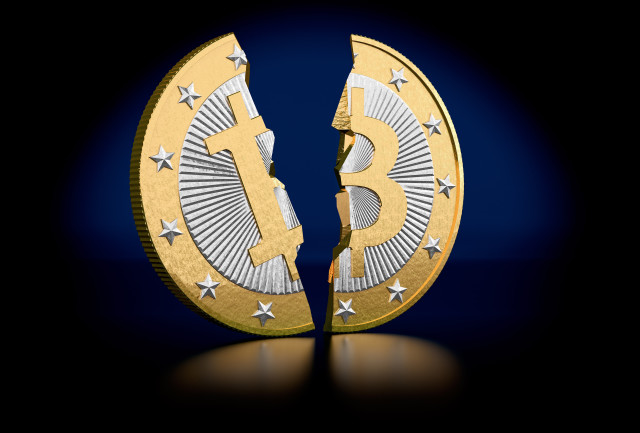
Bitcoin Clone Is Here... Bitcoin Cash

I believe that the next generation is of Cryptocurrency as they are easily transportable, little to zero transaction fees, no human intervention between payor and payee, high anonymity, and even functionality. Money evolves, like anything else, and the natural evolution of money is always as a store of value that is easier to move, more secure, and more private. Bitcoin Cash is the brand-new entrant in digital currency. It was created on August 1, 2017 through a "hard fork." I.e. by the splitting of the bitcoin blockchain. A hard fork is when a digital currency splits into two separate currencies. In this case, the original bitcoin split into bitcoin cash as a means of dealing with disagreements in the community over how the technology behind the currency should run. Everyone who held bitcoin before the split was entitled to the same number of "bitcoin cash" tokens, effectively receiving a free dividend. The blockchain split is the culmination of a long-term scaling debate within the digital currency community. Before the split, only 1 megabyte of transactions could be processed at any one time, which led to delays. Thus literally Bitcoin will be basically unaffected by the creation of the new cryptocurrency.
Who exactly was given access to Bitcoin Cash? How can we obtain it?? These are the questions arise in many minds when heard of the blockchain split. As of August 1, holders of bitcoin who either controlled their private keys or had accounts with exchanges that were supporting Bitcoin Cash should have had access to an equal amount of cryptocurrency on both the bitcoin blockchain and the newly created Bitcoin Cash blockchain. Eventhough there exists some open source and noncustodial bitcoin wallet platforms such as Breadwallet that have provided users with an easy method of obtaining Bitcoin Cash, holders of bitcoin on non-custodial platforms usually need to undergo a manual process and use their private keys to be credited with Bitcoin Cash. Since Bitcoin Cash has yet to articulate its unique value proposition in a clear and well-defined manner its not safe. So I think its good to wait until the Bitcoin Cash market stabilizes as now there exists no legitimate and secure Bitcoin Cash wallet. I.e. when Bitcoin Cash is withdrawn from a wallet or an exchange, there is no alternative Bitcoin Cash wallet that users can utilize apart from exchanges that support Bitcoin Cash trading to store Bitcoin Cash. Thus like many things in the cryptocurrency space, that answer is unclear and it may take a year to get clear.
One of the big problems faced by "bitcoin cash" is a lack of support from the mining community. Miners are needed to verify transaction on the bitcoin blockchain and this requires a large amount of computing power. The process is meant to take roughly 10 minutes, but the less power that is available, the longer the process takes. After the blockchain split, it took more than 5 hours for the first block of "bitcoin cash" transactions to be mined. This indicates that only a small number of miners are working on the new token. So far, only 12 blocks of transactions have been mined. The last block was around 10 hours ago, at the time of writing, according to data website Blockdozer Explorer. So far, only one of these blocks has taken advantage of the larger transaction limit offered by "bitcoin cash."
Bitcoin Cash is an attempt to solve processing issues by allowing blocks to be processed in 8-megabyte units, rather than the one-megabyte block the older version of bitcoin uses. Because Bitcoin Cash is supported by a minority of developers and industry specialists, its future is uncertain and it will likely be prone to volatility. I think the fork is a healthy process because it's similar to how evolution works in nature and will help in adapting itself to changes.

Wednesday, July 12, 2017

Are Vaccines Safe ???

Reducing and eliminating the diseases that vaccines prevent is one of the top achievements in the history of public health. But some how the number of anti vaccinators increased from the past. Its mainly through the widespread of news regarding misconceptions of vaccines. The widespread fear that vaccines increase risk of autism originated with a 1997 study published by Andrew Wakefield, a British surgeon. The article was published in the Lancet, a prestigious medical journal, suggesting that the measles, mumps, rubella (MMR) vaccine was increasing autism in British children. But later this paper was completely discredited due to serious procedural errors. ts publication set off a panic that led to dropping immunization rates. However that went unnoticed by many as usual and still rumours continue to spread.
Vaccines need additives to improve the way they work, increase their shelf life and make them as safe and effective as possible. The three main substances added to vaccines are:
  • adjuvants or enhancer– to make the vaccine more effective
  • stabiliser – to stop the vaccine deteriorating when it is exposed to changes in the environment, such as light and temperature
  • preservatives– to increase the vaccine’s shelf life.
Any licensed vaccine is rigorously tested across multiple phases of trials before it is approved for use, and regularly reassessed once it is on the market. Scientists are also constantly monitoring information from several sources for any sign that a vaccine may cause an adverse event. Most vaccine reactions are usually minor and temporary, such as a sore arm or mild fever. In the rare event a serious side effect is reported, it is immediately investigated. So available vaccines remain safe.
Common Myth is that: Vaccines can cause autism bacause they contain ingredients that are dangerous. The most often blamed culprit is thimerosal.
Thimerosal, which is approximately 50% mercury by weight, has been one of the most widely used preservatives in multi-dose vaccines. It is metabolized or degraded to ethylmercury and thiosalicylate. Ethylmercury is an organomercurial that should be distinguished from methylmercury, the chemical actually known to cause harm. Methylmercury is the type of mercury found in certain kinds of fish. At high exposure levels methylmercury can be toxic to people. But over a lifetime, everyone is exposed to some methylmercury through food and environment. The different type of mercury in thiomersal has the ability to be metabolised at a faster rate and they get excreted quickly from our body. Thus thiomersal is less likely to produce harmful effects on the human body.
Thimerosal is used to prevent the growth of microbes during the manufacturing process..Thiomersal is more commonly used in mixed dose vaccines. Live and single dose vaccines do not necessarily need agents likeThimerosal. When each new needle is inserted into the multi-dose vial, it is possible for microbes to get into the vial. The preservative, thimerosal, prevents contamination in the multi-dose vial when individual doses are drawn from it. Receiving a vaccine contaminated with bacteria can be deadly.
In developing countries like India, multi dose vaccines are still being used at large as these countries cannot afford to make single dose vaccines and not to use preservatives like thiomersal. The cost of producing single dose vaccines and the need to refrigerate them for proper storage and transport makes the use of thiomersal absolutely necessary. However, USA and some countries have decreased the use of thiomersal in vaccines only as a precaution. But even in those countries, it’s use has not been discontinued altogether.
Research indicates there is no difference in the rates of autism between vaccinated and unvaccinated children. While autism may seem more common in recent years, This is because the diagnosis of autism now includes children with milder symptoms who would not have been included in the past. There is also greater public awareness of autism, and more parents are seeking help. Even today the true causes of autism remain a mystery, but to the discredit of the autism-vaccination link theory, recent studies provides evidence that autism develops in utero, well before a baby is born or receives vaccinations. There is no evidence of a link between MMR vaccine and autism or autistic disorders. Still anti-vaccine ideologists uses ”thiomersal” and “mercury poisoning” as their main weapon for propagating base-less ideas and creating alarm in minds of parents.
Another myth is that Babies Immune system get overloaded with vaccines. Based on the number of antibodies present in the blood, a baby would theoretically have the ability to respond to around 10,000 vaccines at one time. Even if all 14 scheduled vaccines were given at once, it would only use up slightly more than 0.1% of a baby’s immune capacity. And scientists believe this capacity is purely theoretical. The immune system could never truly be overwhelmed because the cells in the system are constantly being replenished. In reality, babies are exposed to countless bacteria and viruses every day, and immunizations are negligible in comparison.
WHO has closely monitored scientific evidence relating to the use of thiomersal as a vaccine preservative for over 10 years, in particular through its independent expert advisory group, the Global Advisory Committee on Vaccine Safety. The Committee has consistently reached the same conclusion: there is no evidence to suggest that the amount of thiomersal used in vaccines poses a health risk. Immunization with thiomersal-containing multi-dose vaccines currently protects at least 64% of all infants and children against four diseases with high mortality rates: diphtheria, tetanus, pertussis and Haemophilus influenza type b. The use of thiomersal-containing vaccines to protect against these diseases averted at least 1400000 child deaths in 2010. Thiomersal-containing vaccines are being used in over 120 countries. Removing thiomersal completely from vaccines would require either using alternative preservatives or using preservative-free single dose vaccines exclusively. Alternatives would incur significant costs for development and regulatory approval, thereby limiting the ability to offer affordable vaccines.
Immunisation is one of our most significant achievements. It saves around 3 million lives world-wide each year and helps to prevent outbreaks and hospitalisations from vaccine-preventable diseases. As a parent its your duty to protect your child by ensuring vaccines are given on time. Vaccine-preventable diseases are still common in many countries. Increased travel and immigration means the risks are real.

In reality, the benefits of vaccination greatly outweigh the risk i.e., having a vaccination is much safer than not having one. They're not 100% effective in every child, but they're the best defence against the epidemics that used to kill or permanently disable millions of children and adults. Choosing to protect your child with vaccines is also a choice to help protect your family, friends, and neighbors. i.e. to get vaccinated means to protect ourselves and to protect those around us. Successful vaccination programmes depend on the cooperation of every individual to ensure the wellbeing of all. We should not rely on people around us to stop the spread of disease; we, too, must do what we can.

Tuesday, July 4, 2017

Why We Want to Redefine Kg???

What we call a kg might soon change in future.? Yes you heard right, a substantial change to the International System of Units (SI) is currently under discusstion and might be a reality by 2019. The General Conference on Weights and Measures (CGPM) is scheduled to have its 26th meeting in 2018 and will likely vote on a proposal put forward by the International Committee for Weights and Measures (CIPM) to revise the SI. According to this proposal, the structure of the SI will change fundamentally. The present SI is built upon seven base units: the metre, the second, the kilogram, the ampere, the kelvin, the mole, and the candela. The goal of the new SI is to define all of these units completely in terms of fundamental constants with exact values. Some constants, such as the speed of light, are currently defined in this way, as exact quantities.
IPK
At present, the kilogram is the SI unit of mass and is equal to the mass of the international prototype of the kilogram which is an artefact, not a constant of nature. The kilogram is the only SI unit still based on a physical object. The kilogram will be defined in terms of a quantum-mechanical quantity known as the Planck constant (h) which will be assigned an exact fixed value based on the best measurements obtained worldwide.
The International Prototype Kilogram(IPK) or “Le Grand K” or “Big K” is the palm-sized platinum and iridium cylinder that for 126 years has defined the kilogram from a high-security vault outside Paris where it was protected from dust, moisture, fingerprints, and other corruptions of the outside world and was hailed as the “perfect” kilogram”. Since hydrocarbons on fingertips or moisture in the air could contaminate its pristine surface, it goes untouched for decades, under triple lock and key at the International Bureau of Weights and Measures. Every 40 years, the weight is ushered from its chamber, washed with alcohol, polished, and weighed against 80 official replicas hand-delivered from laboratories around the world.
It is seen that world’s most perfect weight isn’t so perfect anymore. In its most recent weigh-in in 1988, it was found to be 0.05 milligrams,about the weight of a grain of sand, lighter than its underling replicas. But Le Grand K’s guardians are not sure if it is Le Grand K that has slimmed, or whether its comparators have gained weight. Whatever is right ,its not good for a standard to change. You may think why should we care whether a kilogram in a vault is “perfect” or not? We must, as a small discrepancy can become a gargantuan one if you’re dealing with a large quantity, for eg. a full tanker of Rice. Also the kilogram is used as a building block in other measurements. As in the case of the joule( the amount of energy required to move a one-kilogram weight one meter) and candela, a measure of the brightness of light, is measured in joules per second. Therefore if the kilogram is flawed, so are the joule and candela, which could eventually cause problems in an array of industries, particularly in technology.
The slighter instability of big K is unacceptable in precise fields like medicine or engineering, where tiny differences can cause immense problems. Therfore a more reliable standard has to be defined for measuring kg. For instance, the meter, which was originally represented by a metal bar, was redefined in 1983 as the distance light travels in a vacuum during 1/299,792,458 of a second. However standardizing the kilogram is little trickier as the standard could not be changed physically due to environmental changes, accidental damage, or even sabotage. To overcome such risks and also to improve our system of units, we need a definition that depends on nothing other than the value of a fundamental constant, e.g. the Planck constant h, a fixed quantity linked to E=MC2 and quantum theory that specifies the amount of energy carried by a single particle of light, or photon.

To be continued....